
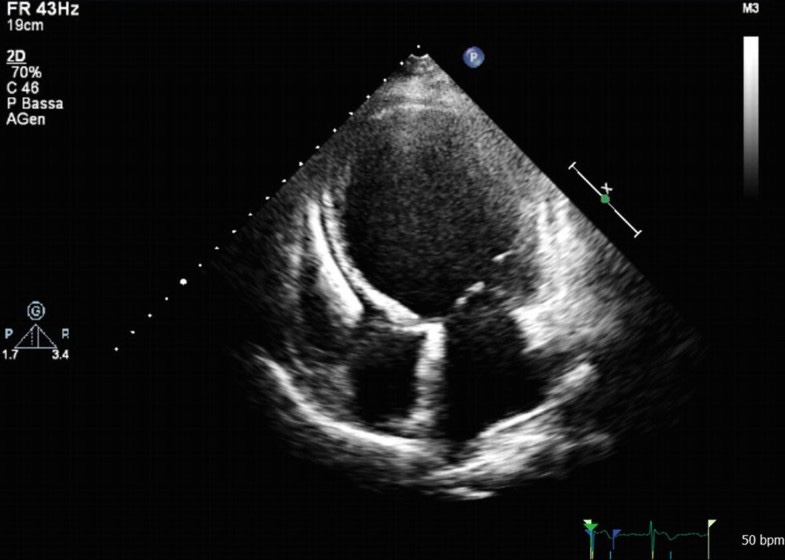
🔹 idiopathic
🔸may be transmitted by an autosomal dominant gene
🔹 left atrial enlargement present, it may result from diastolic dysfunction and MR
🔸 mitral valve thickening may be present, mitral calcification may be present as well
🔹Physical symptoms: DOE, angina, arrhythmia, syncope, or sudden death. Systolic murmur (crescendo-decreacendo that ⬆️ with Valsalva)
🔸types:
1️⃣ ASH – asymmetric septal hypetrophy
2️⃣ SAM – systolic anterior mitral valve motion
3️⃣ HCM – hypertrophic cardiomyopathy
❣️apical hypertrophic cardiomyopathy has increased QRS voltage and giant negative T waves; looks like ace of ♠️; myocardium appears bright. Asymmetric hypertrophy: septal to posterior wall > 1.3:1 ; LVOT obstruction causes the AV to close in mid systole ( do m-mode in PLAX). Dagger shaped late peaking jet ➡️ do PW starting at the mid LV in A5 until you get peak velocity, then switch to CW for max PG ⏩ Modified Bernoulli for LVOT PG= 4V^2.
4️⃣ HOCM – hypertrophic obstructive cardiomyopathy ( SAM and HCM)
5️⃣ IHSS – idiopathic cardiomyopathy
🔹pulsus alterans: alternating strong and weak pulse in dilated cardiomyopathy
🔸also, EF may be around 20-30%
🔹restrictive cardiomyopathy: amyloidosis, sarcoidosis, hemochromatosis, glycogen storage
🔸”ground glass” appearance ➡️
🔹amyloidosis involves abnormal proteins. Sometimes described as translucent waxy protein build up on the myofibrils.
🔷 https://smw.ch/article/doi/smw.2017.14490 for reference ⏩ main pic taken from that website- very informative on Takotsubo cardiomyopathy
🔷 hint: which cardiomyopatgy is autosomal dominant? ➡️ hypertrophic
🔷 hint 2: know the echoe signs of congestive cardiomyopathy ⏩ B-notch on mitral valve M-mode ( increased LVEDP), thrombus may be present, AI, double ♦️ ♦️ on m-mode indicates reduced mitral valve excursion.
Credit: ASE Echo, Edelman Conference, Susan DeWitt
https://link.springer.com/chapter/10.1007/978-3-030-13864-6_7


 Echo Lab and Boards Review